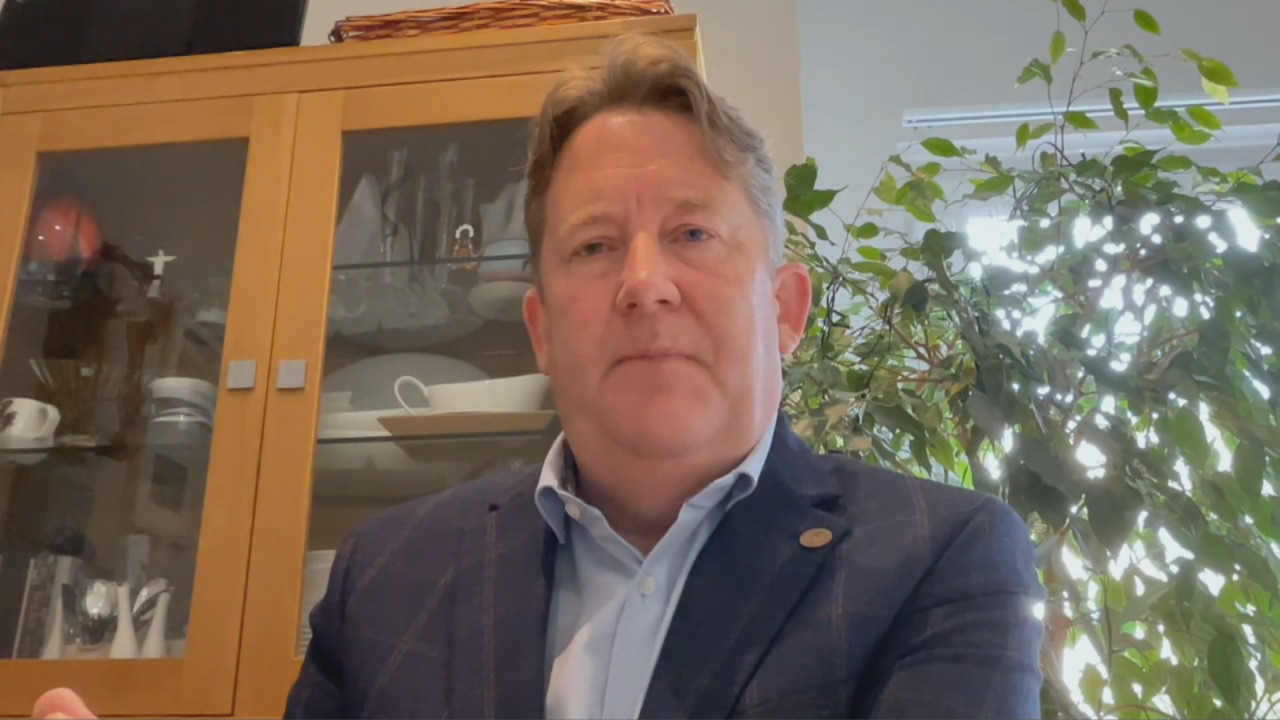

Our guest this week is Darragh O’Brien, Ireland’s Minister for Climate, Energy and the Environment and Minister for Transport. In his position, O’Brien has been directly involved in dealing with the fallout of the Middle East crisis, especially rising energy costs.
O’Brien says Ireland, like most EU states, hasn’t really had an issue with fossil fuel supply despite the weeks-long closure of the Strait of Hormuz, instead pointing to the rising cost of fossil fuels as the EU’s main challenge. “In Ireland, our reserves are robust. We have no issue with supply at the moment, but I think for us in Ireland, like our EU colleagues, the issue is price.”
Faced with nationwide protests over surging fuel prices, the Irish government has tried to respond by implementing concrete measures, including direct subsidies for low-income families. But O’Brien warns this can only be a short-term fix. “The longer this crisis goes on, no government is going to be able to deal with every single price increase. That’s why it’s imperative that the current situation is resolved.”
Watch moreEU unveils plan to tackle energy crisis
For him, the closure of Strait of Hormuz represents the EU’s “second big wake-up call,” after Russia‘s full-scale invasion of Ukraine in February 2022, laying bare how vulnerable the bloc still is to foreign disruptions. According to the European Commission, the EU has spent an extra €24 billion on energy imports since the start of the Iran war. And data from the Institute for Energy Economics and Financial Analysis shows the bloc’s imports of Russian liquefied natural gas are up 16 percent in the first quarter of 2026, reaching a record high since the start of the war in Ukraine.
O’Brien admits increasing fossil fuel imports from Russia is “not the way forward” but believes the EU has learned its lesson when it comes to its dependency on imported fossil fuels. He points to efforts on renewables and electrification at the national and EU levels, but argues more needs to be done to accelerate the process.
Even if the Strait of Hormuz reopened tomorrow, O’Brien believes the EU must prepare for when, not if, the next crisis happens. “We’ve had Brexit, we’ve had the pandemic, we’ve had the outbreak of war in Ukraine, we’ve had the tariff situation with the United States, and we now have the crisis in the Middle East and the cost-of-living crisis. So we have six in less than 10 years. We need to prepare better for that, and we need to respond better.”
Programme prepared by Isabelle Romero, Perrine Desplats and Oihana Almandoz